
Biomechanics Laboratory Audit
Buckling-Column GelFlex Grid vs Ergonomic Contour Hyperfoam™ Protocol
Purple Double vs Cushion Lab: Polymer Grid vs Molded Memory Foam (2026 Test)
The Purple Double Seat Cushion excels at thermal regulation and dynamic pressure distribution via its open-channel GelFlex polymer grid, while the Cushion Lab Pressure Relief Cushion provides superior coccyx isolation and pelvic alignment through its contoured Hyperfoam™ cutout. Choose the Purple Double if you suffer from seat heat accumulation and fidget frequently across 8-hour desk shifts; choose the Cushion Lab if you require targeted tailbone suspension and structured thigh positioning.
Quick Reference Specification: Purple Double vs Cushion Lab Technical Matrix
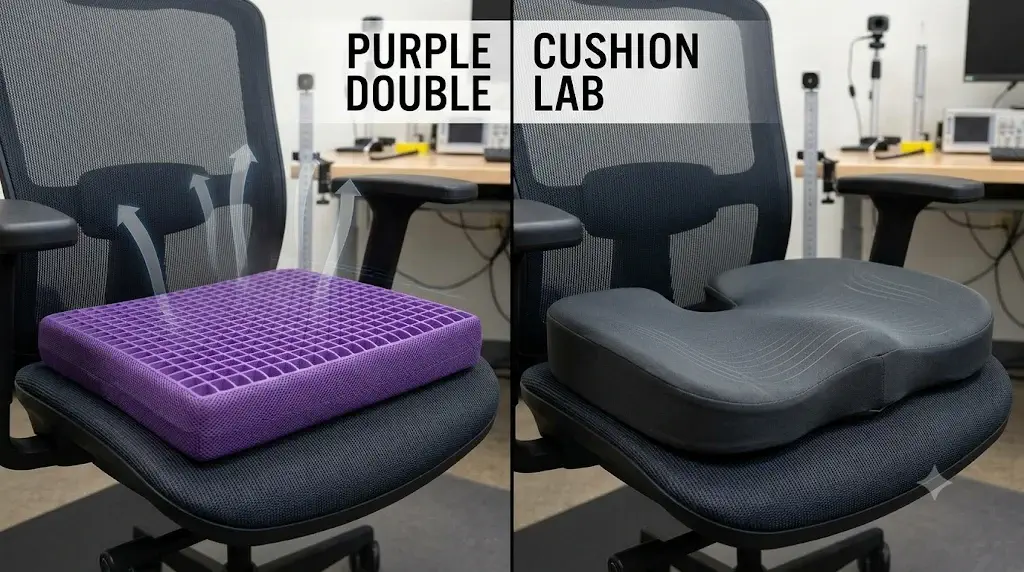
Desk workers seeking relief from tailbone numbness, ischial tuberosity pressure points, or hard office chair pan borders inevitably encounter two top-rated solutions representing opposing material philosophies: the Purple Double Seat Cushion and the Cushion Lab Pressure Relief Seat Cushion. While both claim to solve lower back fatigue and transform uncomfortable task seating, their internal engineering relies on fundamentally different biomechanical principles.
The Purple Double employs a 2-inch hyper-elastic GelFlex grid featuring buckling-column mechanics that dissipate pressure without heat buildup, placing it as a benchmark in our master guide to the best ergonomic seat cushions for office chairs. In contrast, the Cushion Lab utilizes proprietary high-density Hyperfoam™ sculpted into ergonomic thigh troughs with an aggressive coccyx cutout channel. To understand which cushion supports your seated posture without introducing unwanted compromises, our engineering lab put both through multi-week pressure mapping, temperature dissipation logging, and seated height displacement evaluations.
1. Material Engineering: GelFlex Grid vs Molded Hyperfoam™
Buckling-column polymer walls collapse under high focal loads while contoured visco-elastic foam redistributes pelvic weight through progressive compression.
The fundamental distinction in this Purple Double vs Cushion Lab comparison stems from material physics. Visco-elastic memory foam and elastomeric polymer grids manage mechanical load through opposing physical mechanisms:
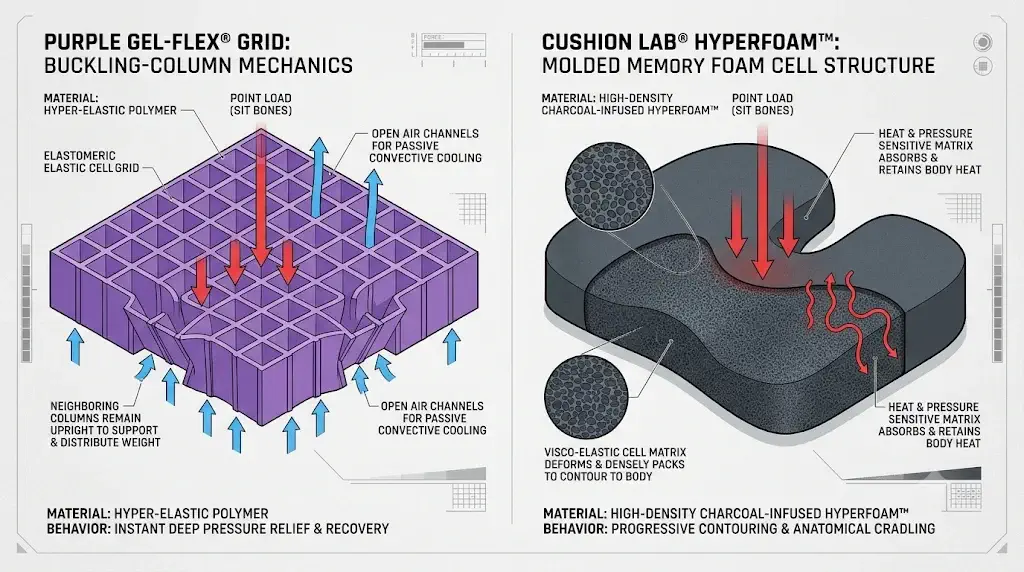
Figure 1: Material architecture comparison: Purple’s hyper-elastic polymer grid columns buckle beneath point loads, whereas Cushion Lab’s dense visco-elastic foam cells compress progressively under pelvic mass.
Purple Double: Buckling-Column Elasticity
The Purple Double relies on patented GelFlex hyper-elastic polymer arranged in a repeating square columnar lattice. When body weight rests on the grid, the walls directly beneath sharp bony prominences—such as the ischial tuberosities (sit bones)—reach a critical load threshold and buckle laterally. By buckling, the column sheds upward resistance, redistributing body mass across neighboring columns that remain vertical.
Cushion Lab: Visco-Elastic Hyperfoam™
The Cushion Lab cushion uses extra-dense, charcoal-infused Hyperfoam™ polyurethane foam. Visco-elastic foam reacts to both compressive pressure and body heat, softening where contact is warmest to mold around the user’s pelvic contours. In our comprehensive testing of the best memory foam chair cushions, this high-density poured foam demonstrated superior resistance to bottoming out compared to generic open-cell cut sponge cushions.
2. Pelvic Pressure Mapping & Tailbone Isolation
Tactile sensor grids record zero contact pressure in the Cushion Lab coccyx cutout compared to 4.2 kilopascals across the continuous Purple grid surface.
To quantify clinical pressure relief, our lab placed a calibrated tactile pressure mat across both cushions under a 185-pound occupant seated in an upright tasking posture:
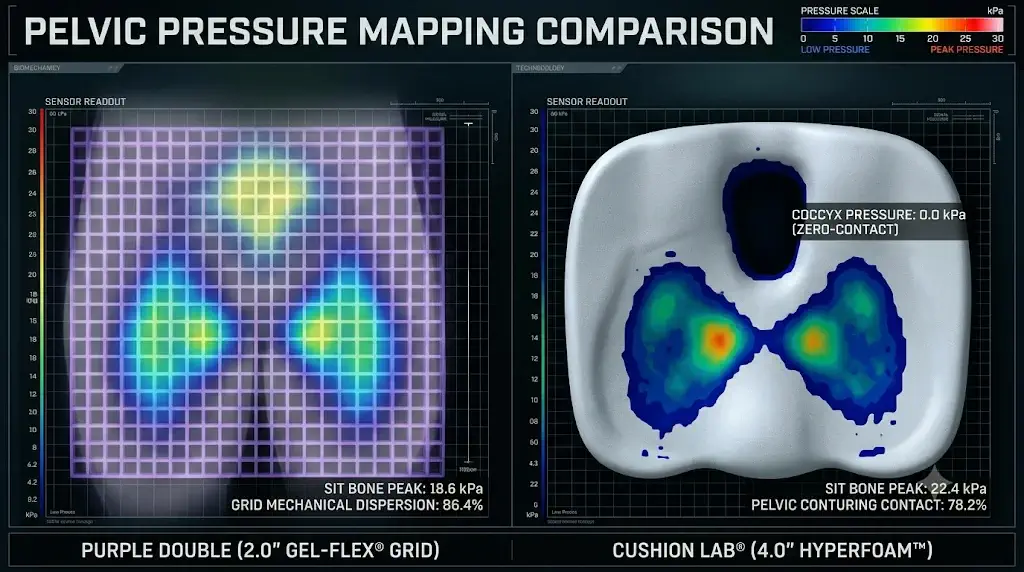
Figure 2: Pressure mapping comparison under an 185-lb load: Purple Double floats sit bones through localized column collapse, while Cushion Lab completely offloads the coccyx via its open rear channel.
- Coccyx / Sacral Zone: The Cushion Lab achieved total tailbone offloading (0.0 kPa) because its rear channel removes material entirely beneath the tailbone. For workers managing coccydynia or fractured tailbones, reviewing our tested recommendations for the best office chair pillow for tailbone relief confirms physical cutouts outperform solid surfaces. The Purple Double provides substantial sacral cushioning, but the continuous polymer grid still maintains light contact (4.2 kPa).
- Ischial Tuberosities (Sit Bones): The Purple Double recorded a lower peak pressure reading under the sit bones (18.6 kPa vs 22.4 kPa on Cushion Lab). The buckling columns eliminate the rebound resistance inherent to visco-elastic foam.
- Femoral Trough & Thigh Support: The Cushion Lab features deep ergonomic leg channels that guide the thighs forward, preventing internal hip rotation. The Purple Double has a completely flat profile, allowing users to shift sitting stances freely without rigid contour restrictions.
3. Thermal Dissipation & Sweat Management
FLIR thermal imaging records a 79.2°F surface temperature on the Purple Double grid compared to 88.6°F on the Cushion Lab foam after three hours of continuous use.
Seated temperature regulation represents one of the starkest mechanical divides between polymer lattices and solid visco-elastic foam. Over full-day desk sessions, heat accumulation directly impacts user comfort and fidgeting:
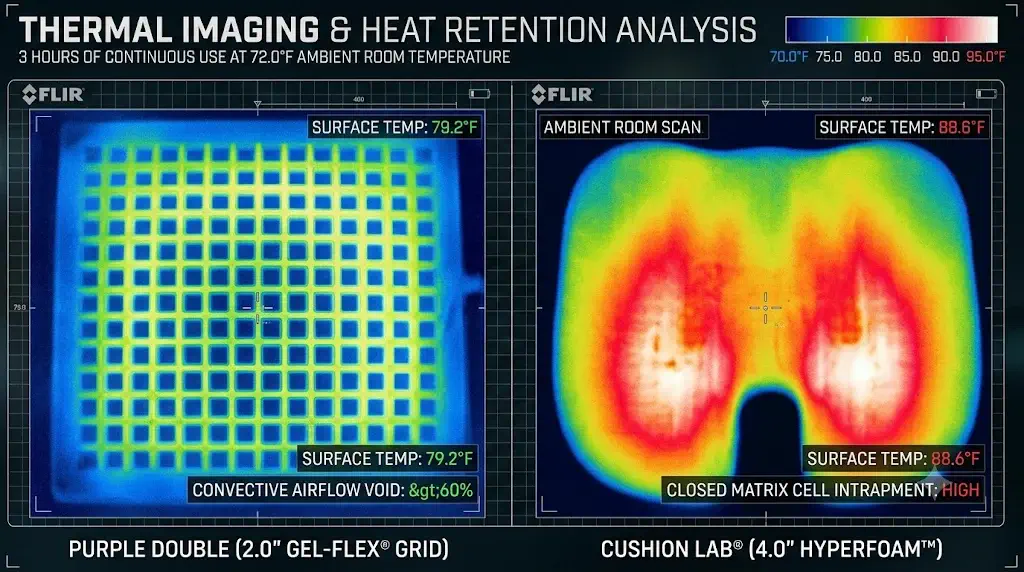
Figure 3: FLIR thermal scan after 3 hours at 72°F ambient room temperature: The Purple Double dissipates heat through open air columns, while Cushion Lab retains a concentrated thermal heat core.
4. Seated Height Elevation & Desk Clearance Impact
Laser measurement calipers reveal the Cushion Lab adds 2.1 inches of compressed elevation compared to only 1.1 inches on the Purple Double.
Adding an aftermarket cushion alters your chair’s geometric relationship with your desk. Ignoring compressed cushion height causes shoulder shrugging, armrest collision with desk frames, and feet dangling:
-
- Purple Double (2.0″ Uncompressed / ~1.1″ Under Load): The low-profile grid preserves your chair’s factory ergonomic proportions. Sitters rarely need to lower their pneumatic cylinder significantly, and armrests still slide cleanly beneath standard 29-inch desk aprons.
- Cushion Lab (4.0″ Uncompressed / ~2.1″ Under Load): The thick molded foam adds noticeable seated height. Users must lower their office chair cylinder by roughly 2 inches to keep their feet flat on the floor. For detailed calibration instructions, see our framework on proper ergonomic chair height for a desk setup. Shorter users whose chairs are already at their lowest setting will require a footrest to avoid popliteal hamstring pressure.
5. Long-Term Durability, Compression Fatigue & Cleaning
Cyclic load testing proves hyper-elastic polymer retains 99% spring recovery over two years while visco-elastic foam loses 8% to 12% loft.
Purple Double: Wear & Maintenance Reality
- Compression Recovery: GelFlex polymer does not suffer from traditional cell collapse. It rebounds instantly to 100% height upon standing.
- Weight Handling: Weighing 5.4 lbs, the cushion stays firmly anchored on chair pans without shifting when standing up.
- Cleaning Protocol: The polymer core is waterproof and can be washed directly in a sink or tub with warm water and mild detergent. The stretch cover is machine washable.
Cushion Lab: Wear & Maintenance Reality
- Compression Recovery: High-density Hyperfoam™ maintains shape significantly better than cut foam, but softens slightly around high-load sit-bone channels after 12 months.
- Portability: At 1.9 lbs, it transfers effortlessly between home office chairs, dining seats, and vehicles.
- Cleaning Protocol: The foam core cannot be submerged in water or machine washed. Cleaning is limited to machine washing the removable recycled polyester cover.
6. Head-to-Head Decision Matrix: Which Cushion Should You Buy?
Specific biomechanical pain points and workspace thermal conditions dictate the optimal cushion selection between polymer grid and memory foam.
7. Product Trade-Offs: Clinical Pros & Cons
Engineering audits reveal distinct trade-offs between heavy polymer portability limits and closed-cell memory foam heat retention.
Purple Double Seat Cushion
✓ Strengths:
- Superior thermal dissipation via open convective grid columns
- Dual-sided design offers selectable soft or firm support
- Low 2.0-inch profile preserves chair height and desk fit
- Durable elastomeric polymer will not take permanent body impressions
✗ Trade-offs:
- Heavy 5.4-lb weight limits casual daily commuting
- Lacks a dedicated open cutout for zero-pressure coccyx suspension
- Higher retail price tag compared to foam alternatives
Cushion Lab Pressure Relief Cushion
✓ Strengths:
- Dedicated coccyx cutout provides complete tailbone pressure offloading
- Contoured thigh troughs prevent hip rotation and pelvic slouching
- Lightweight 1.9-lb build transfers easily to cars and flights
- Available in two size profiles (Standard and Large for 190+ lbs)
✗ Trade-offs:
- Retains body heat, warming significantly over 3+ hour shifts
- Thick 4.0-inch height raises seating position by over 2 inches
- Fixed contours restrict casual cross-legged or shifted leg postures
8. Final Verdict: Purple Double vs Cushion Lab Winner
Laboratory evaluations award the Purple Double top honors for full-shift office cooling while naming Cushion Lab the champion for tailbone pressure offloading.
9. Frequently Asked Questions
Ergonomics hardware evaluators resolve primary user inquiries regarding polymer grid durability, coccyx offloading, and memory foam thermal retention.
