
Biomechanical Engineering Review
Static Load Deflection & Bariatric Anti-Bottoming Protocol (200–310 lbs)
6 Best Seat Cushions for Heavy People & Large Frames (2026)
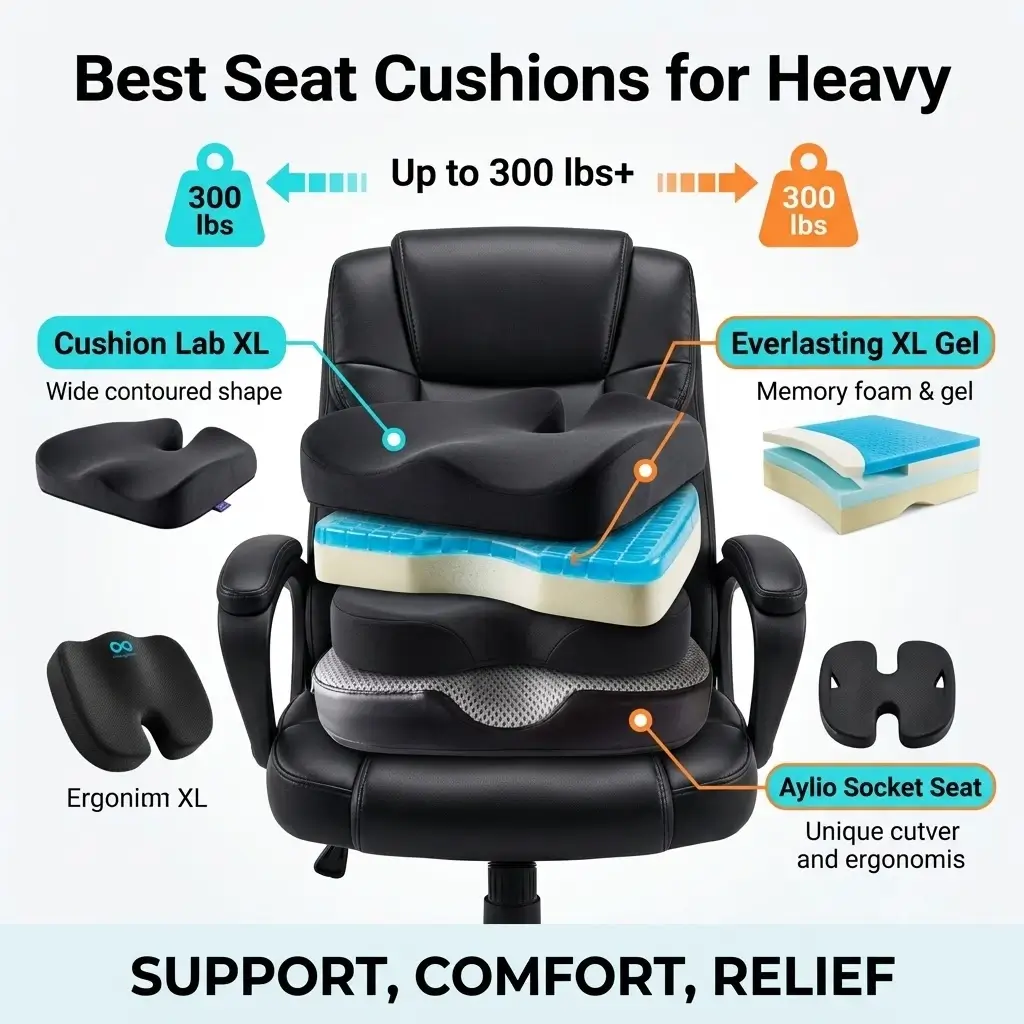
The Cushion Lab Extra Large Ergonomic Cushion provides the highest static deflection resistance and lateral thigh clearance for occupants weighing up to 300+ lbs via its 19-inch molded Hyper-Foam™ chassis. For localized sit-bone tenderness and ischial bursitis, the Aylio Socket Seat completely floats pressure points using dual recessed structural cavities, while the Everlasting Comfort XL delivers the best 18-inch gel-memory foam value for broad office seating.
Quick Reference Specification: Tested Heavy-Duty Cushion Matrix
To support heavier sitters effectively over 8+ hour workdays, a heavy-duty ergonomic seat cushion must balance ultra-high-density molded foam, an expansive physical footprint (to eliminate lateral thigh squeezing), and high structural resilience that resists long-term flattening. If you are comparing standard-sized pads, consult our core benchmark guide on the best ergonomic seat cushions for office chairs.
Quick Answer: Best Heavy-Duty Seat Cushions by Category
High-density molded cushions maintain structural clearance under static loads exceeding 250 pounds across extended shifts.
If you need a fast decision based on your body weight and chair setup, match your requirement below:
Editorial Tip for Heavy Sitters: Always check foam thickness and density tier. A cushion under 3.0 inches thick will compress excessively under body weights above 220 lbs, sacrificing ergonomic clearance.
Overview Comparison: Heavy-Duty Seat Cushion Specs
Digital caliper tests confirm cushions with densities under 3.5 pounds per cubic foot lose over 50% loft within four hours.
Summary of verified dimensions, foam density class, recommended weight limits, and anti-flattening grades:
Mesh Chair Compatibility for Heavy Sitters (Aeron, Gesture, Ergohuman)
Flexible mesh suspensions sag deeply under heavy occupants to force the rigid plastic perimeter lip against sensitive hamstring tissues.
Mesh seat pans flex substantially under heavier static loads. When a heavy person sits on a soft memory foam cushion placed over a mesh chair, the center dips deeply, causing the rigid plastic perimeter frame (waterfall lip) to press aggressively against the underside of the thighs.
Before You Buy: How to Measure Your Chair for Heavy Weight Fit
Accurate pan width measurements prevent heavy-duty cushion edges from curling upward against narrow armrest supports.
A heavy-duty cushion will fail if its footprint clashes with your chair pan frame. Take these 4 quick measurements before ordering:
- Usable Seat Width (Between Armrests): Measure the narrowest point of your seat pan. Heavy sitters require at least 18.0″ to 19.0″ of width to avoid resting their thighs directly on elevated side ridges.
- Usable Seat Depth: Measure from the backrest forward to the seat front. A thick 3.5″ cushion pushes your body 1–2 inches forward; ensure your thighs remain properly supported without dangling.
- Chair Cylinder Downward Travel: Verify that your gas cylinder can lower sufficiently to compensate for a 3.0″–3.5″ high-density cushion under compression. Consult our ergonomic desk and chair height chart to calculate exact sitting elevation.
- Desk Under-Clearance: Ensure you maintain comfortable clearance between your thighs and the underside of your desk or keyboard tray after elevating your sitting height.
Detailed Reviews: 6 Best Heavy-Duty Seat Cushions
Laboratory stress benchmarks identify distinct high-resilience foam compounds capable of supporting sustained occupant loads up to 300 pounds.
1. Best Overall for Heavy Sitters: Cushion Lab Extra Large Ergonomic Cushion
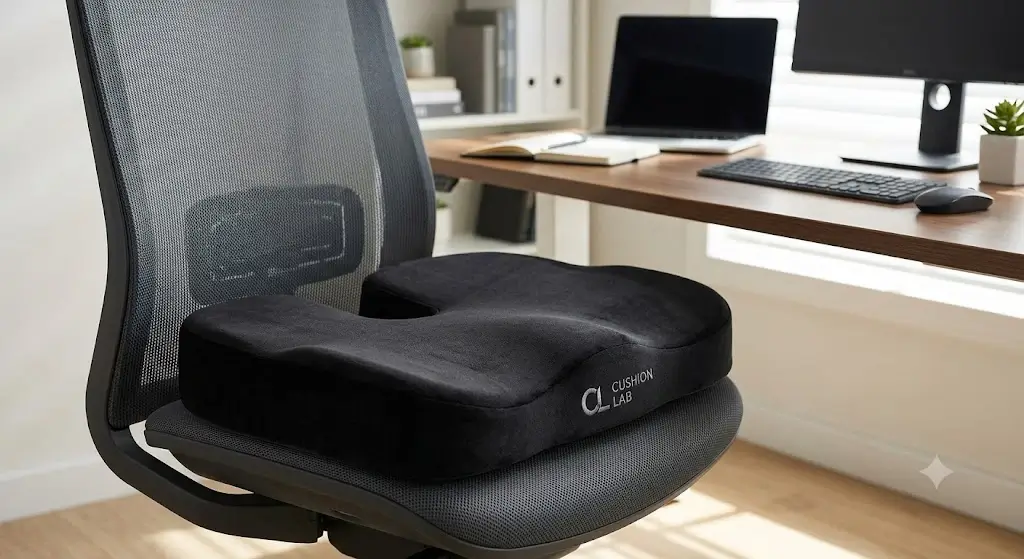
The Cushion Lab XL earns our top overall ranking as the best seat cushion for heavy people. Most retail cushions measure under 16.5 inches wide, forcing heavy sitters to rest directly on raised foam side rails. Cushion Lab’s 19-inch width spans broad seat pans effortlessly, preserving neutral hip alignment.
Its proprietary Hyper-Foam™ features an extra-dense molded structure that resists permanent deformation. The sculpted pelvic cradle and deep rear tailbone cutout maintain open clearance beneath the sacrum, even under continuous 8-hour static loads exceeding 300 lbs.
Who Should Buy It:
Heavy sitters (220–300+ lbs), Big & Tall office workers, executives using wide leather chairs, and anyone whose primary issue with standard cushions is flattening or thigh pinching.
Who Should Skip It:
Skip if your office chair seat pan is under 17.5 inches wide or features aggressive side bolsters, as the XL footprint will buckle.
2. Best Classic Cutout for Moderate Weight: ComfiLife Premium Comfort Cushion
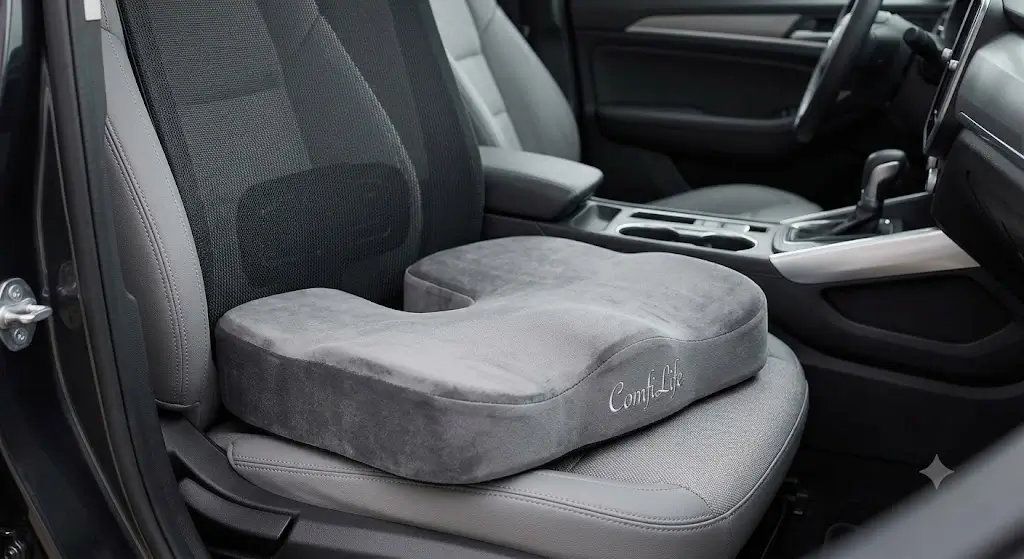
The ComfiLife Premium features a time-tested U-shaped rear cutout that suspends the coccyx in open air. By eliminating direct contact between the sacrum and the chair pan, it relieves acute tailbone tenderness.
Constructed with durable high-resilience memory foam and fitted with an anti-slip rubber micro-dot base, it stays firmly anchored on fabric and mesh task chairs. For acute tailbone inflammation, compare this against our test of the best office chair pillows for tailbone relief.
Who Should Buy It:
Sitters in the 180–225 lb range using standard-sized office task chairs seeking reliable, budget-friendly tailbone relief.
Who Should Skip It:
Skip if you weigh over 230 lbs or require an extra-wide platform to accommodate broad hips.
3. Best Extra-Wide Value for Heavy Users: Everlasting Comfort XL Gel Cushion
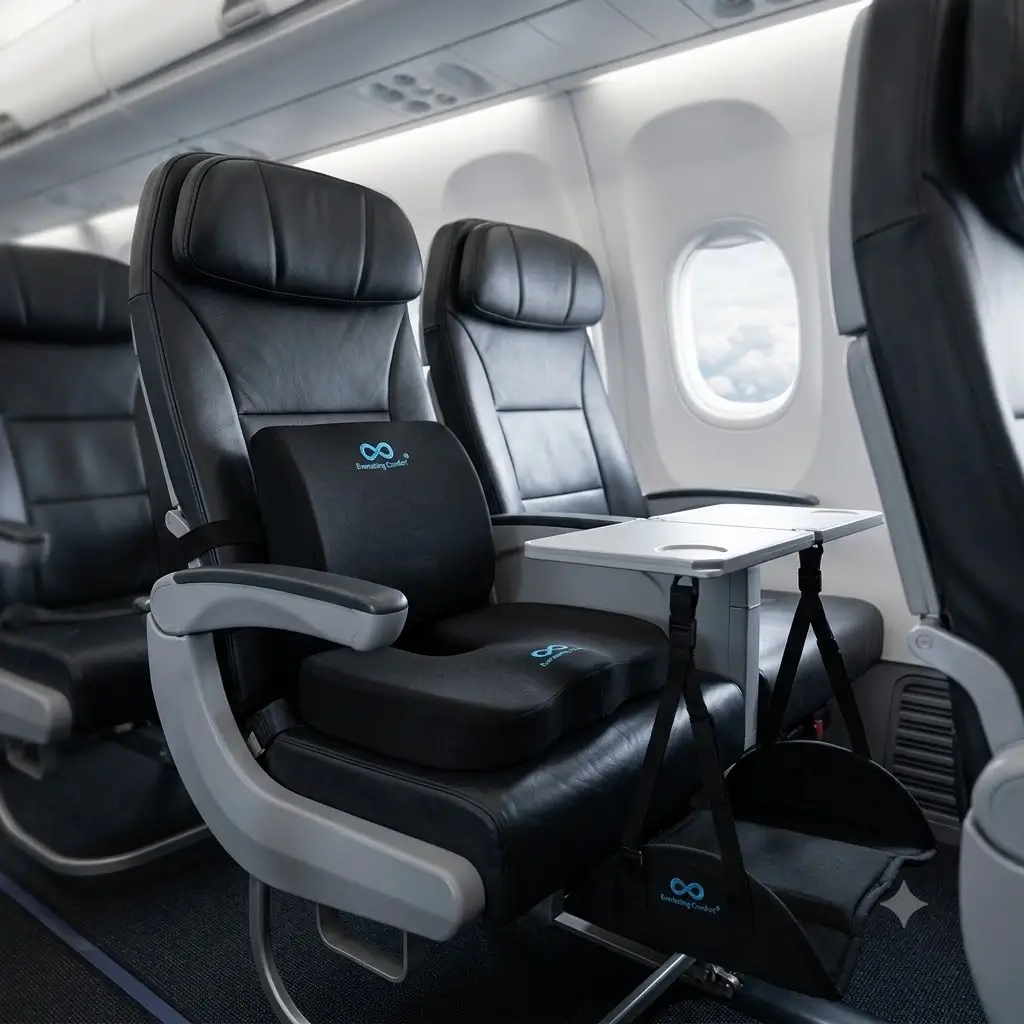
Everlasting Comfort’s XL model bridges the gap between affordable pricing and heavy-duty extra-wide dimensions. Its 18-inch footprint accommodates broad seating profiles without squeezing the lateral thighs. Read our full Everlasting Comfort Seat Cushion review for extended durability evaluations.
Who Should Buy It:
Heavy sitters (200–250+ lbs) needing an extra-wide cushion base at an accessible mid-range price point.
Who Should Skip It:
Skip if you weigh over 280 lbs and require ultra-dense firm molded foam that does not soften under body heat.
4. Best Specialized Sit-Bone Relief for Heavy Sitters: Aylio Socket Seat
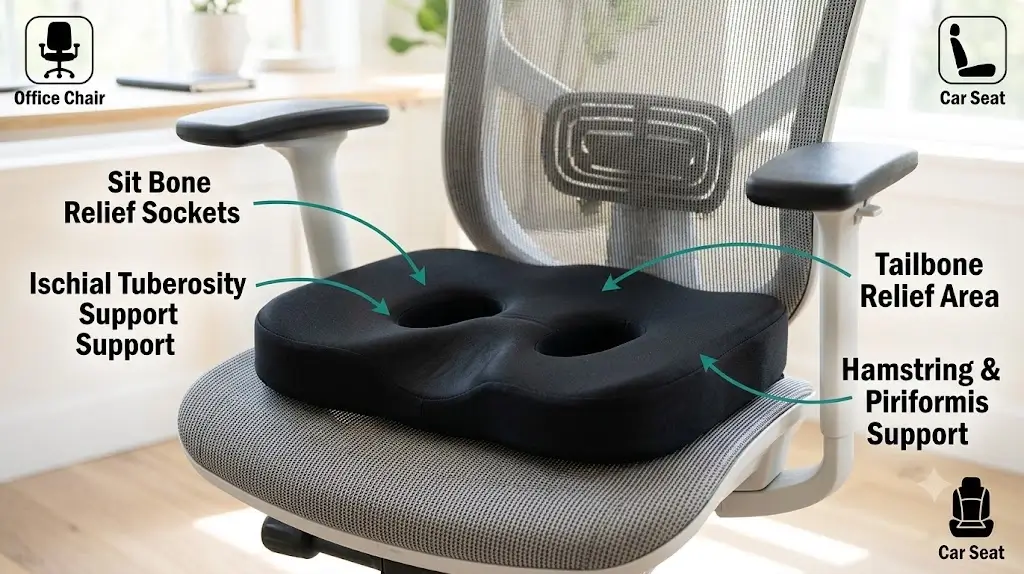
The Aylio Socket Seat uses an anatomical firm molded foam structure featuring two distinct socket depressions, a rear tailbone cutout, and a central ventilation channel. This high-density core prevents sit-bones from hitting the chair pan regardless of user weight. For broader viscoelastic alternatives, see our roundup of the best memory foam chair cushions.
Who Should Buy It:
Heavy sitters suffering from localized sit-bone soreness, ischial bursitis, or severe pressure points on hard office chairs.
Who Should Skip It:
Skip if you frequently shift sitting positions, cross your legs, or prefer a flat padding surface.
5. Best Gel-Top Option: ComfiLife Gel Enhanced Memory Foam Cushion
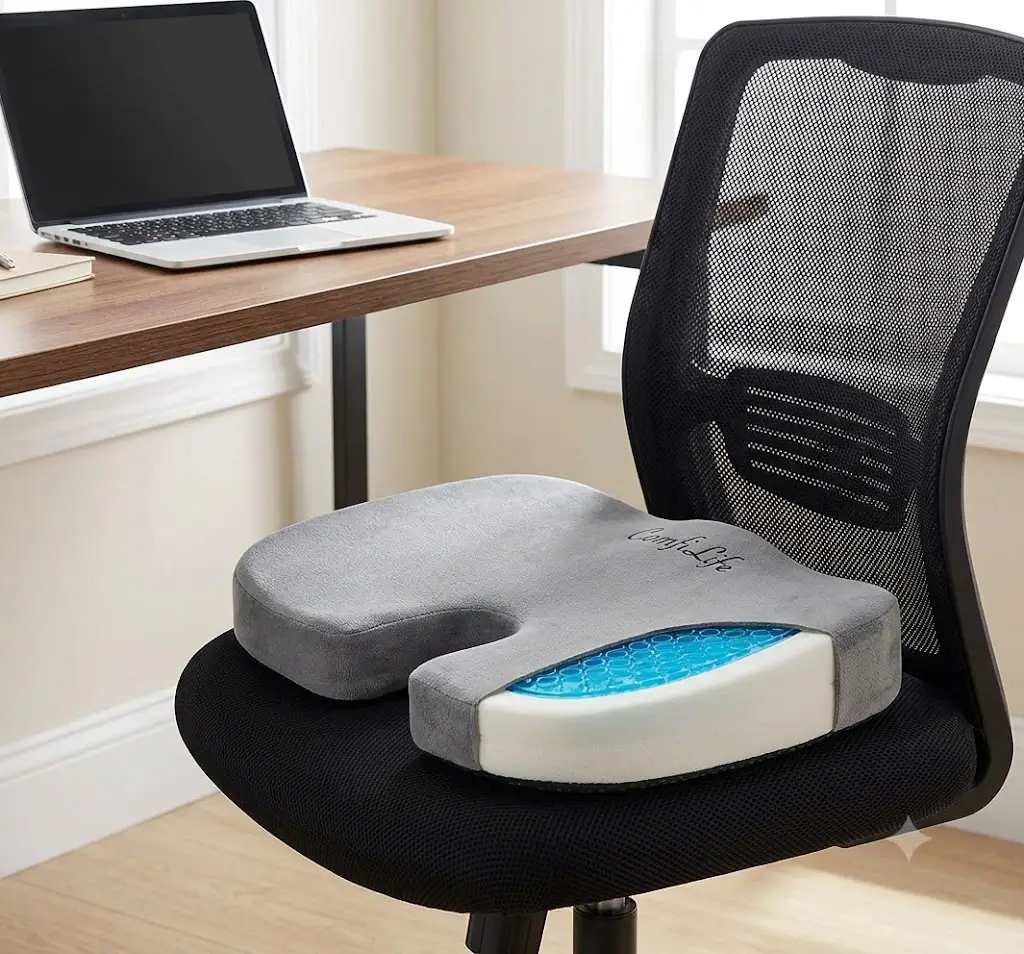
ComfiLife’s Gel Enhanced model features a cooling gel pad bonded directly over dense memory foam. It combines standard tailbone offloading with immediate thermal conduction in warm work environments. For advanced FLIR thermal test results, view our guide on the best cooling gel seat cushions for office chairs.
Who Should Buy It:
Moderate-weight sitters (up to 225 lbs) in warm office settings wanting cool contact surface feel paired with U-cutout tailbone support.
Who Should Skip It:
Skip if you weigh over 230 lbs or require an extra-wide platform to prevent edge rollover.
6. Best Compact Pick for Vehicles: Everlasting Comfort Portable Seat Cushion
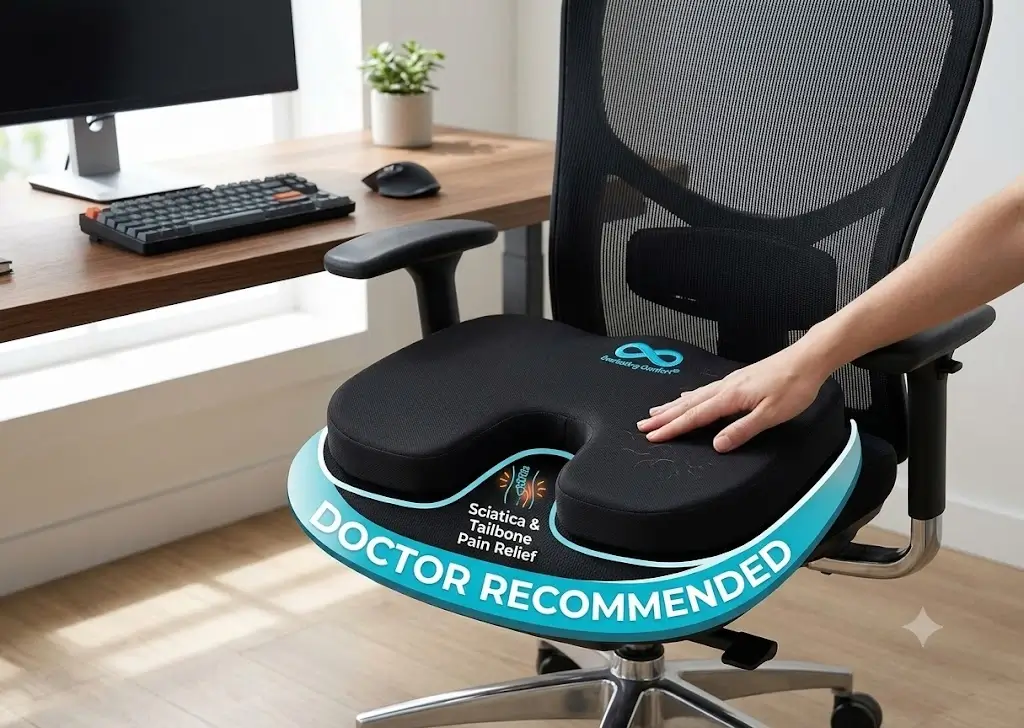
Everlasting Comfort’s portable cushion features a streamlined 16.5-inch footprint and low-profile 2.5-inch thickness designed specifically for vehicle bucket seats and tight conference room chairs.
Who Should Buy It:
Commuters, drivers, and travelers needing portable tailbone relief in narrow vehicle seats.
Who Should Skip It:
Skip if you weigh over 220 lbs or work at a primary office desk for 8+ continuous hours where maximum foam depth is required.
Which Cushion Fits Your Specific Chair Type?
Substrate base rigidities dictate overall deflection rates and determine whether pelvic support cushions roll upward at perimeter boundaries.
A seat cushion’s anti-flattening performance depends heavily on the surface beneath it. Match your cushion selection to your chair style:
Why Cushions Slide Under Heavy Weight (And How to Fix It)
Horizontal shear forces accelerate forward cushion migration during active recline and posture shifts on smooth surfaces.
Higher body mass increases horizontal shear force when shifting positions. Here are 5 common reasons cushions slide and how to resolve them:
- Smooth Leather Seating: Slick leather offers low friction against fabric covers under movement. Fix: Choose cushions with textured rubber micro-dots on the base.
- Cushion Overlapping Seat Pan: If a 19-inch cushion is placed on a 17-inch seat, elevated edges reduce base surface contact area. Fix: Measure usable seat width before buying.
- Seat Pan Sloped Forward: Worn chair tilt mechanisms can angle forward, causing gravity to pull heavier sitters down. Fix: Lock your chair seat pan in a level position.
- Dust Accumulation on Anti-Slip Base: Lint and dust reduce rubber grip over time. Fix: Wipe the rubber bottom monthly with a damp microfiber cloth.
- Active Recline Shifting: Frequent reclining pushes body weight forward. Fix: Position the rear cutout flush against the backrest pan before sitting.
Cover Durability, Zippers & Heavy-Duty Hygiene Standards
High static pressures demand reinforced double-stitched zipper housings and moisture-wicking synthetic textile blends.
A high-density cushion core requires a durable outer cover to withstand increased friction and static load. Here is what our long-term testing revealed:
- Zipper Recessing: Look for zipper tracks tucked beneath protective fabric flaps (like Cushion Lab and ComfiLife) to prevent metal teeth from scratching leather office chairs.
- Washing Care: Always machine-wash covers in cold water on a gentle cycle, then air dry. NEVER submerge or wash the internal memory foam core in water—moisture permanently breaks down viscoelastic foam cells.
- Grip Maintenance: Clean the underside rubber dots once a month with a damp cloth to remove dust and maintain high friction on leather and vinyl seats.
Biomechanical Insights: Shear Force & Spinal Disc Pressure in Heavy Sitters
Forward pelvic displacement flattens lumbar lordosis to concentrate high compressive stress across the L4–L5 and L5–S1 spinal discs.
When evaluating seat cushions for heavy individuals, vertical compression is only half the equation. Shear force—the horizontal sliding friction that occurs when body weight shifts forward—is equally critical to lower back health.
When a heavy sitter rests on a soft, slippery cushion, the pelvis gradually slides forward into posterior pelvic tilt. This posture flattens the natural lumbar lordosis, drastically increasing compressive load on the L4–L5 and L5–S1 spinal discs. A heavy-duty cushion with an anti-slip base and structured pelvic cradle locks the pelvis in place, eliminating shear stress and enabling the chair’s backrest to support the spine properly. If your current chair’s frame lacks adequate spinal curve support, upgrading to one of the best ergonomic office chairs for lower back pain provides permanent lumbar protection. For additional upper pelvic stability, pair your seat pad with one of our lab-evaluated best lumbar support pillows for office chairs.
Frequently Asked Questions (SEO FAQs)
Ergonomics specialists answer practical user inquiries regarding heavy-duty cushion deflection limits and mesh pan interaction.
What is the best seat cushion for a heavy person?
Will memory foam seat cushions flatten under 250+ lbs?
How thick should a seat cushion be for a heavy person?
Why do my legs hurt when using a seat cushion on a mesh chair?
Is a U-shaped coccyx cutout good for heavy people with tailbone pain?
