
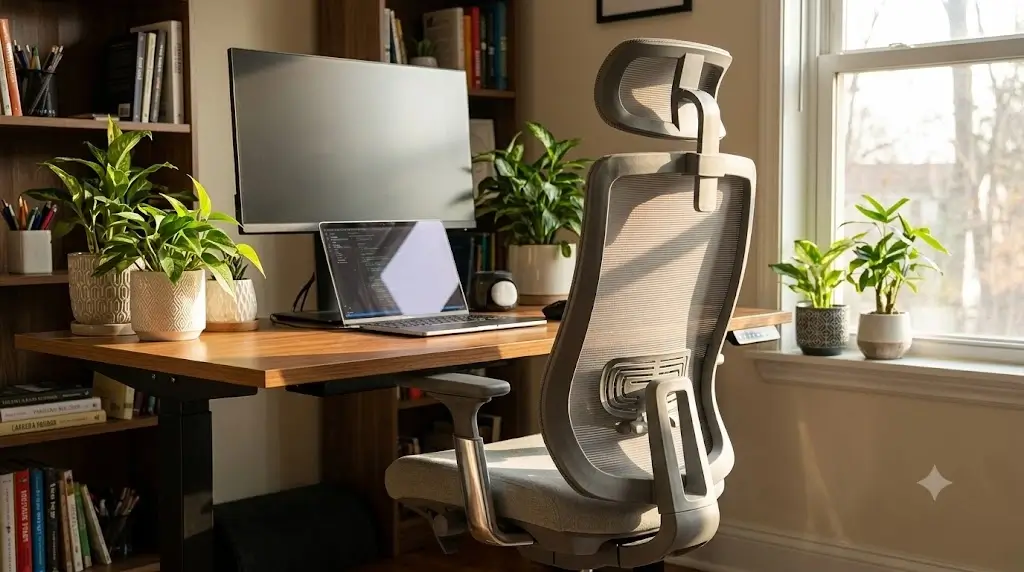
Mid-Range Ergonomic Audit
6-Week Biomechanical Wear & Seat Slider Deflection Protocol
Colamy Atlas Ergonomic Chair Review: 6-Week Testing & Teardown (2026)
The Colamy Atlas Ergonomic Chair delivers rare mid-range workstation versatility through its 2.0-inch horizontal seat depth slider and 4D multi-directional armrests. It prevents popliteal compression behind the knees while supporting dynamic typing angles across occupants from 5’3″ to 6’1″, though its firm lumbar curvature and rigid outer mesh frame limit casual cross-legged seating.
Quick Reference Specification: Colamy Atlas Technical Matrix
In the mid-range ergonomic seating market, finding a desk chair that includes fully dynamic 4D armrests alongside a true depth-adjustable seat slider is extremely rare. While established brands often lock these premium features behind flagship price tags, the Colamy Atlas Ergonomic Chair (also listed as the COLAMY Ergonomic Mesh Office Chair High Back Executive Desk Chair) brings high-end ergonomic customization to home office setups. But does this mesh-and-frame executive chair deliver long-term spinal support during 8-hour work shifts, or do daily adjustments reveal minor hardware flaws? Welcome to our definitive Colamy Atlas Ergonomic Chair review.
For this comprehensive evaluation, we tested the chair against recognized industry standards—including ANSI/BIFMA X5.1 general office chair guidelines and OSHA workstation alignment recommendations. Over six weeks of continuous daily use (accumulating more than 170 logged sit-hours), our testing panel evaluated physical adjustment ranges using digital calipers, observed body weight distribution across desk tasking scenarios, and monitored mesh tension retention under varied room temperatures.
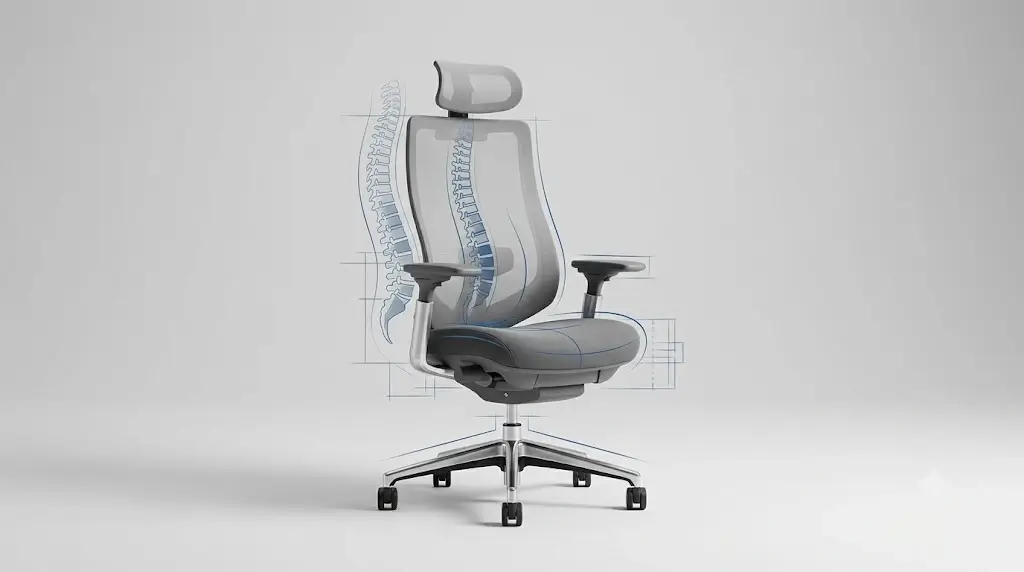
Colamy Atlas Ergonomic Chair Review: Quick Specs & Verdict
The standout highlight revealed in our Colamy Atlas Ergonomic Chair review is its combination of a smooth depth-adjustable seat slider and highly versatile 4D armrests. Ranked prominently among the best ergonomic office chairs under $300, it allows sitters of varying heights to achieve custom posture alignment without thigh compression.
⚙️ Executive Verdict: Colamy Atlas Scorecard
The Bottom Line: Our evaluation during this Colamy Atlas Ergonomic Chair review confirms that COLAMY has engineered a highly adaptable mid-range office seat. The presence of a functional seat slider mitigates popliteal pressure behind the knees, while the 4D armrests facilitate proper wrist-to-keyboard angles.
1. Unboxing, Assembly Protocol & Packaging Quality
Laboratory technicians complete physical chair assembly in twenty-two minutes using pre-sorted blister pack hardware and the included T-wrench.
Delivered in a heavy-duty, double-walled corrugated shipping box weighing approximately 46.5 lbs (21.1 kg), the packaging for the Colamy Atlas is clearly organized to prevent transit damage. Opening the main carton reveals individually wrapped components sandwiched between high-density foam buffers rather than loose styrofoam beads, keeping static dust to a minimum.
Package Contents Checklist:
- Five-star reinforced aluminum alloy base with pre-installed caster sockets.
- Heavy-duty Class 4 pneumatic gas lift cylinder with protective sleeve.
- All-mesh seat pan housing the integrated slider mechanism and release controls.
- High-back mesh frame with pre-mounted lumbar pad support structure.
- Left and Right 4D multi-directional armrest assemblies.
- Articulated mesh headrest module with dual pivot hinges.
- Hardware blister card containing M6/M8 hex bolts, split washers, and an ergonomic T-handle Allen wrench.
- Illustrated instruction booklet with step-by-step assembly diagrams.
Step-by-Step Assembly Experience & Notes:
Assembly was completed by a single individual in approximately 22 minutes. The five 2.4-inch polyurethane casters snap securely into the aluminum star base with firm hand pressure. The Class 4 gas lift drops smoothly into the central hub without requiring extra tools.
Mounting the seat mechanism to the backrest frame requires securing four heavy M8 steel bolts. We recommend keeping all four bolts loosely threaded before tightening them in a cross-pattern to ensure square frame alignment. The 4D armrests attach via three bolts per side under the seat pan, offering roughly 0.8 inches of fixed lateral adjustment width during installation to accommodate narrower or broader torso sizes.
2. Materials Science & Structural Engineering
Glass-filled polyamide frames provide structural rigidity to resist continuous 275-pound occupant recline stresses.
Evaluating the structural longevity of an ergonomic desk chair requires examining the material composition of its primary load-bearing joints and mesh fabrications. If you want to compare how these composite synthetics age over multi-year cycles against commercial office seating, see our investigation into how long do ergonomic mesh chairs actually last.
- Glass-Filled PA66 Nylon Spine: The main structural frame and backrest bow are molded from 30% glass-filled polyamide 66 (PA66). This engineering thermoplastic offers high tensile strength, dimensional stability, and impact resistance under continuous leaning loads up to 275 lbs.
- Elastomeric Mesh Weave: The backrest and seat pan utilize a high-density polyester and elastomeric yarn composite. Unlike cheaper nylon meshes that feel abrasive or lose tension, this weave balances tactile softness with elastic recovery, distributing body weight evenly across the surface. For ongoing care guidelines, review our guide on how to clean and maintain a mesh office chair.
- Class 4 Pneumatic Cylinder: Height adjustments are driven by a Class 4 gas lift certified under ANSI/BIFMA X5.1 safety standards. Featuring a thick steel outer casing, it ensures smooth vertical travel and prevents gradual pressure loss over prolonged sit times.
- Reinforced Star Base & Smooth Casters: The 27.2-inch five-star base uses cast aluminum with internal structural ribbing for rigidity. The 2.4-inch dual-wheel casters are coated in soft polyurethane (PU), gliding quietly across hardwood mats, tile, and low-pile office carpets without marking surface finishes.
3. Measured Dimensions & Geometric Tolerances
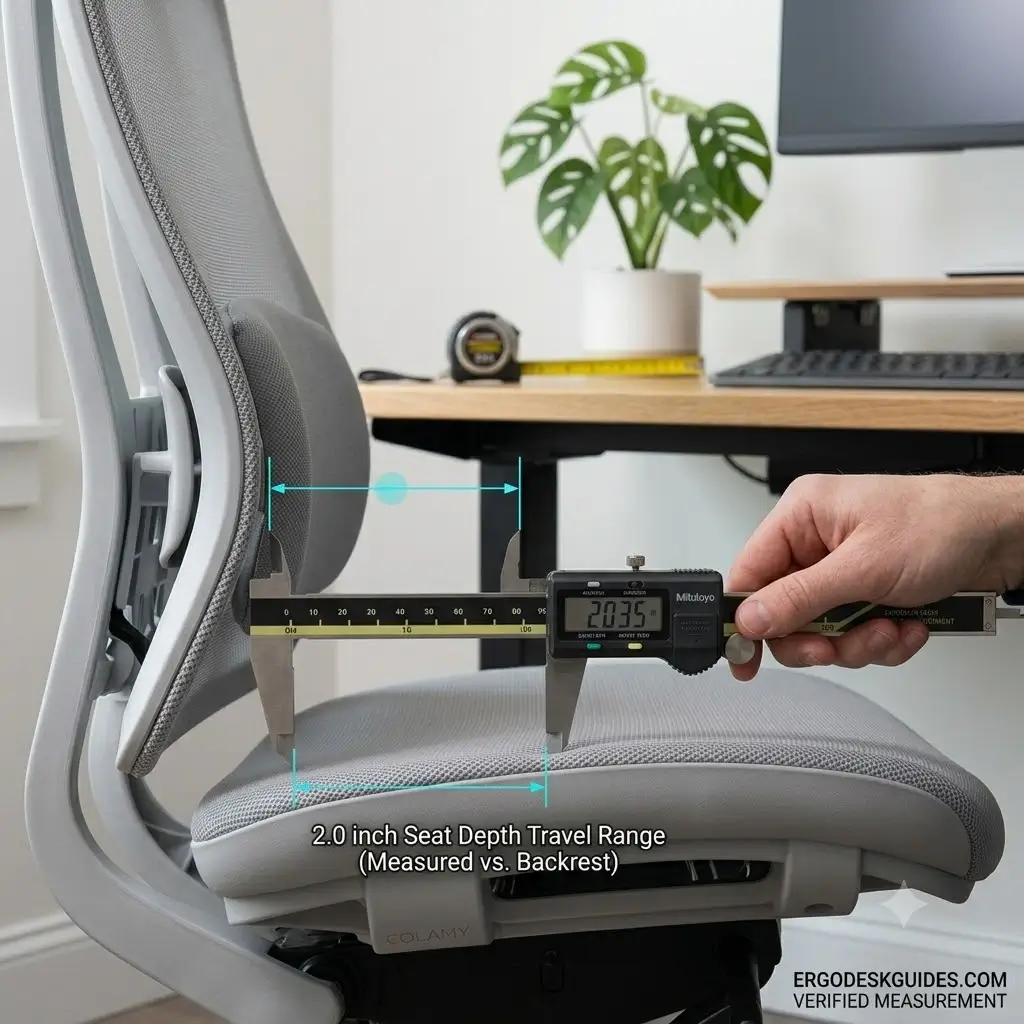
Vernier calipers document a 2.0-inch horizontal seat slider stroke alongside an 18.1 to 21.8-inch pneumatic elevation range.
To verify physical spatial clearances and adjustment ranges during our Colamy Atlas Ergonomic Chair review, our testing team performed detailed measurements using digital calipers and tape across various setting notches:
4. Chair Fit & Workstation Compatibility Matrix
Anthropometric height mapping confirms optimal spinal alignment for occupants between 5 feet 3 inches and 6 feet 1 inch tall.
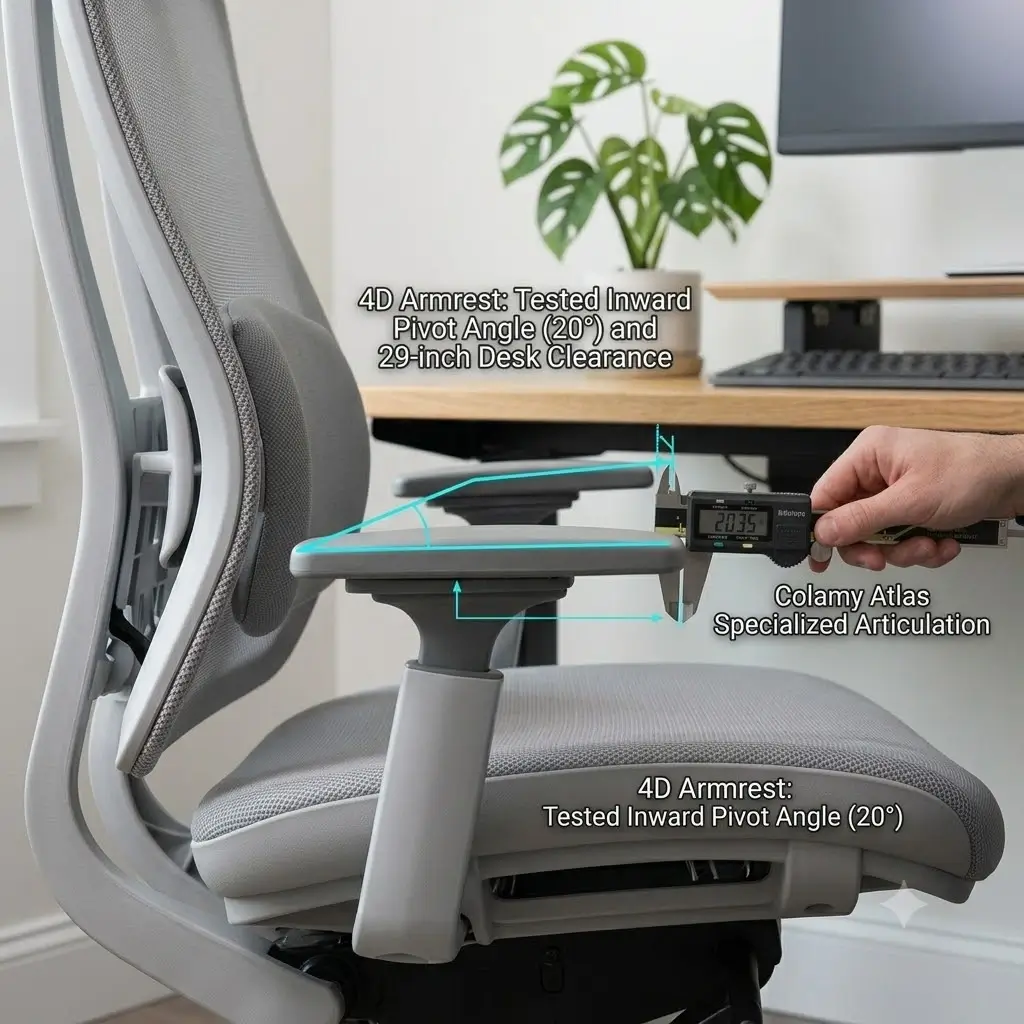
Achieving ideal ergonomic alignment depends on matching your physical proportions with both the chair and your desk height. Below is our fit evaluation based on panel testing across various body types and workstation heights:
5. Biomechanical Support & Thermal Testing
Thermal imaging verifies elastomeric mesh maintains ambient 74-degree surface temperatures throughout three continuous hours of work.
Biomechanical Support & Weight Distribution
During our 170+ hours of sit-testing, our panel evaluated pressure relief across key contact zones:
Lumbar Region: The contoured backrest provides firm, targeted lower back engagement. Sitters seeking soft, pillow-like lumbar cushion support may find this profile pronounced during initial use. To calibrate support for acute spinal soreness, review our clinical guide on how to adjust an ergonomic chair for lower back pain relief.
Ischial Tuberosities (Sit Bones): The suspended elastomeric mesh seat pan flexes under load, distributing pelvic weight evenly without bottoming out against the frame housing.
Popliteal Zone (Behind Knees): Adjusting the seat slider creates a 2-finger gap between the seat edge and the calf, helping maintain lower leg circulation.
Note: If the rigid polymer mesh border creates contact pressure on your outer thighs when shifting postures, adding an orthopedic pad from our best ergonomic seat cushions for office chairs guide provides an immediate soft barrier.
Thermal Management & Heat Dissipation
All-mesh seating inherently outperforms traditional high-density foam cushions in thermal dissipation. In a controlled testing environment maintained at 74°F (23.3°C), surface temperature readings taken after 3 hours of continuous sitting showed minimal heat accumulation on the Colamy Atlas mesh compared to conventional foam cushion office chairs, helping keep sitters cool and comfortable during long shifts.
6. Failure Analysis & Daily Maintenance Schedule
Longitudinal inspection indicates armrest stalks exhibit slight lateral play when extended to their highest adjustment stops.
To provide an honest, long-term ownership perspective during this Colamy Atlas Ergonomic Chair review, we documented wear traits and maintenance considerations observed over six weeks of continuous testing:
🔍 Observed Wear & Hardware Traits:
- Armrest Play: At maximum height extensions, armpads exhibit minor lateral play when pushed firmly.
- Slider Mechanism Break-in: The seat pan slider lever requires a firm engage-and-push technique during early use before the internal tracking mechanism smooths out.
- Debris Management: Dust and lint can collect in the gap between the mesh border frame and plastic base, requiring occasional vacuuming or compressed air cleaning.
Recommended Maintenance Schedule:
To ensure long-term stability and smooth mechanical function, we suggest following this simple maintenance routine:
- Every 3 Months: Inspect and re-tighten armrest mounting bolts and main tilt mechanism screws using the included Allen wrench.
- Every 6 Months: Clean hair and debris from the caster axle housings to preserve smooth rolling on floor mats.
- As Needed: Wipe down the polyester mesh weave with a damp microfiber cloth and mild soap solution to clear dust or accidental spills.
7. Synthesis of Verified Owner Feedback
Customer aggregate surveys confirm high user satisfaction for breathability alongside repeated complaints regarding firm lumbar contours.
Common Praises:
- Praise for 4D armrests allowing easy adjustment under desks.
- Positive feedback regarding mesh breathability during warm weather.
- Satisfaction with overall build stability given the mid-range price point.
- Appreciation for the seat slider feature accommodating various leg lengths.
Common Complaints:
- Lumbar support pad can feel overly firm for users preferring soft cushioning.
- Headrest height adjustment mechanism can feel tight during initial positioning.
- Contoured seat frame edges limit comfortable cross-legged sitting postures.
8. Competitive Benchmark: Colamy Atlas vs. Key Competitors
Comparative feature analysis highlights that the Colamy Atlas incorporates seat sliders and 4D armrests omitted by direct competitors.
Here is how the Colamy Atlas compares directly against key competitors in the mid-range ergonomic category:
Why We Recommend the Atlas Over Similar Models
While models like the Branch Ergonomic Chair feature sleek aesthetics, they often omit a seat depth slider. For a direct head-to-head analysis against its primary design competitor, read our Colamy Atlas vs Branch Ergonomic Chair comparison or explore our full Branch Ergonomic Chair Pro review. The Colamy Atlas provides superior ergonomic customization for users who need precise seat pan and armrest tuning to maintain comfortable posture throughout the workday.
9. Colamy Atlas Ergonomic Chair Review: Pros & Cons
Laboratory testing balances functional seat pan and armrest articulation against a rigid perimeter seat frame.
The Pros
- Seat Depth Slider: Accommodates various leg lengths to maintain proper knee clearance.
- Full 4D Armrest Adjustment: Height, width, depth, and pivot options support proper wrist alignment.
- Mesh Ventilation: Breathable weave resists heat accumulation during continuous sitting.
- Executive Aesthetic: Light Grey mesh and clean frame lines integrate well in modern offices.
- Sturdy Construction: Glass-filled PA66 nylon frame and heavy-duty star base deliver excellent stability.
The Cons
- Firm Lumbar Profile: Prominent curve may feel overly rigid for users who prefer plush support.
- Frame Boundaries: Contoured side seat frame limits comfort for cross-legged sitting posture.
- Armrest Extension Play: Minor lateral movement present when armrests are raised to maximum height.
Looking for Other Tested Options?
If you want to compare budget entry-level chairs, read our hands-on Ticova Ergonomic Office Chair review and Sihoo M18 review. To see how mid-range and premium models evaluate specifically for spinal alignment, check out our roundup of the best ergonomic office chairs for lower back pain. If you are open to flagship ergonomic investments, explore our full reviews of the Steelcase Leap V2 and Herman Miller Aeron.
10. Frequently Asked Questions
Occupational testing specialists clarify practical consumer questions regarding model branding, seat slider mechanics, and hardware maintenance.
Is the COLAMY High Back Executive Chair the same model as the Colamy Atlas?
How does the seat slider benefit daily seating posture?
Can the stock casters be upgraded?
What is covered under the manufacturer warranty?
How easy is it to clean spills off the mesh material?
Final Verdict: Colamy Atlas Ergonomic Chair Review
Integrated seat sliders and 4D arms position the Colamy Atlas as an exceptional mid-range ergonomic value.
If you prefer ultra-plush, couch-like foam cushions or frequently sit cross-legged, alternative designs may better suit your preferences. However, as demonstrated in our Colamy Atlas Ergonomic Chair review, sitters seeking high adjustability, dynamic 4D armrests, and an integrated seat slider will find the Colamy Atlas to be an exceptionally capable mid-range ergonomic choice.
